

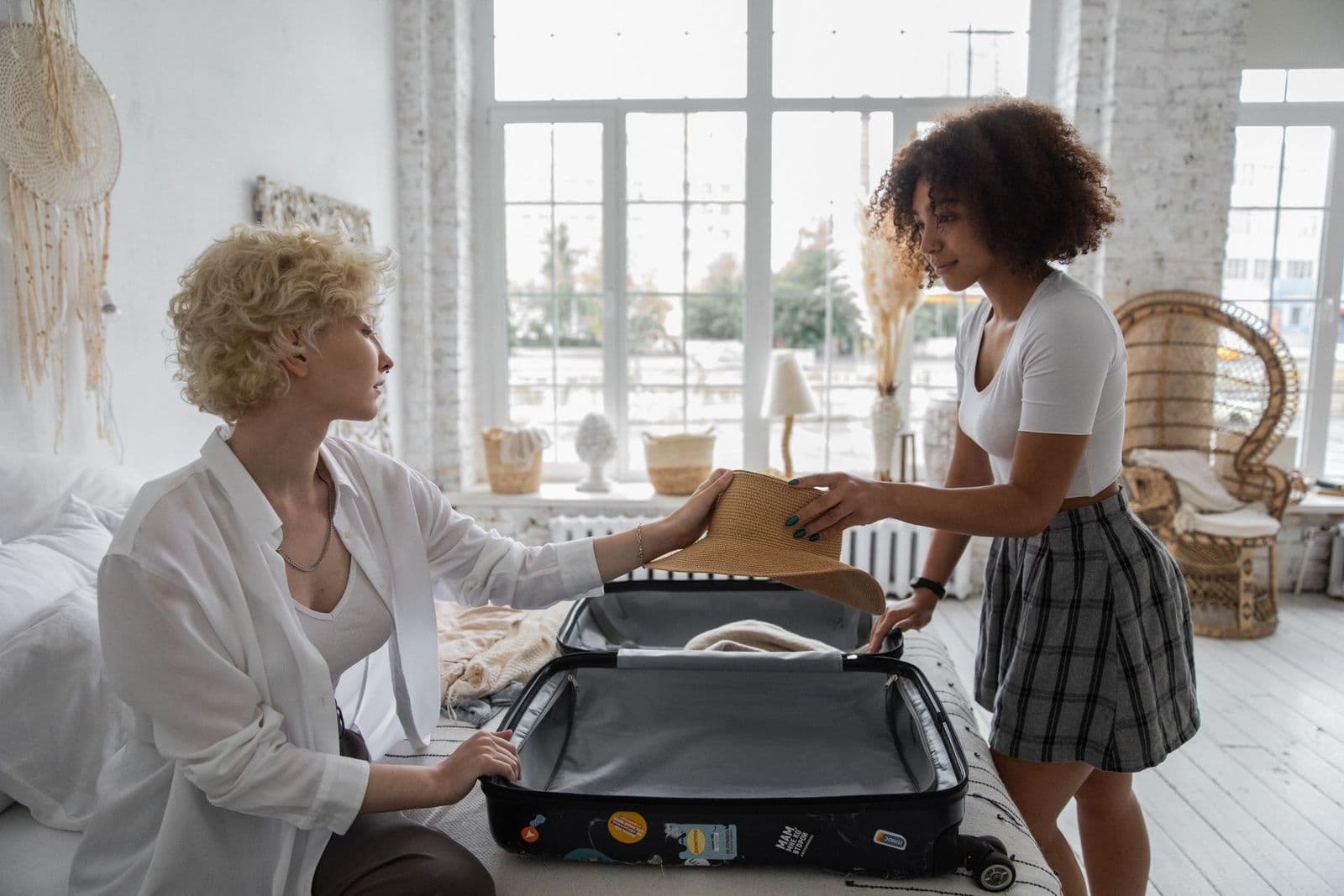
The weeks before you fly out to study abroad are a mix of excitement and last-minute panic — did you print every document you need, pack the right adaptors, arrange your first night's accommodation? A missing document at the airport can delay or even prevent your travel, while forgetting a practical task at home can create stress you do not need in your first week abroad. This pre-departure checklist covers everything in the order you should tackle it, from documents to your first week's to-do list.
Six to Eight Weeks Before Departure
- Confirm your visa is approved and check exactly what documents you need to carry versus what is stored electronically (some countries now use eVisas rather than physical stickers or permits).
- Book your flights, allowing enough buffer before your course start date to deal with jet lag, settle into accommodation and complete any mandatory arrival registration.
- Confirm your accommodation is booked and get written confirmation of your address, move-in date and any keys or access arrangements. See our accommodation guide if this is not yet finalised.
- Arrange travel and health insurance, checking whether your student visa or university already includes mandatory health coverage, and what additional travel insurance you may still need for the journey itself.
- Notify your bank of your travel dates and destination to avoid your cards being blocked for suspected fraud, and check international transaction fees on your existing accounts.
Three to Four Weeks Before Departure
- Gather and organise your key documents in both physical and digital (cloud-backed) form:
- Passport with valid visa
- Offer letter and Confirmation of Acceptance for Studies (or equivalent)
- Proof of accommodation
- Academic transcripts and certificates (originals and certified copies, if required)
- Proof of funds documentation used in your visa application
- Health insurance documents and any required vaccination records
- Passport-sized photographs (several countries require these for local registrations after arrival)
- Register with your university's international student office, if not already done, and check for any mandatory pre-arrival online modules or orientation sign-ups.
- Arrange airport pickup or plan your route from the airport to your accommodation, particularly important if you are arriving late at night or do not yet speak the local language confidently.
- Check baggage allowances for your specific airline and route, and plan what to pack accordingly rather than overpacking and paying excess baggage fees.
Two Weeks Before Departure
- Get a medical and dental check-up if possible, particularly if you take regular medication — bring an adequate supply along with a doctor's letter explaining your prescription, since customs rules on medication vary by country.
- Buy any essential items not easily available or significantly more expensive at your destination (check what is genuinely cheaper to bring versus buy locally — bulky winter clothing, for example, is often better bought at your destination if it matches the local climate).
- Set up international banking or a multi-currency card so you have access to funds immediately on arrival without relying solely on cash.
- Download offline maps, translation apps and your airline's app for your destination city in case you do not have immediate mobile data on arrival.
- Confirm your accommodation move-in process: who will meet you, what identification you need to show, and whether a deposit or first payment is due on arrival.
What to Pack: A Practical Checklist
- Documents folder (physical, kept in hand luggage): passport, visa, offer letter, proof of accommodation, insurance documents, emergency contacts
- Electronics: laptop, phone, chargers, a universal adaptor plug for your destination country, and a portable power bank
- Clothing appropriate to the climate, including at least one set of formal or smart-casual clothing for orientation events, interviews or presentations
- Medication in original packaging, with a doctor's letter if carrying prescription medicine
- A small amount of local currency in cash for your first day, before you have set up local banking
- Comfort items from home — a few familiar items can meaningfully ease homesickness in your first weeks
Avoid overpacking. Most cities have everything you need available locally, and excess baggage fees or the hassle of moving heavy suitcases across international transit are rarely worth it for items you can buy after arrival.
Your First Week Abroad: What to Prioritise
- Complete any mandatory arrival registration required by your visa or immigration authority (some countries require registration with local police or immigration within a set number of days of arrival).
- Collect your residence permit or complete eVisa registration, if applicable, following the instructions provided in your visa decision letter.
- Register with a local doctor or health service as soon as possible, rather than waiting until you are unwell.
- Open a local bank account, if you plan to, once you have proof of address and your residence documentation.
- Attend university orientation, which typically covers essential local information, campus facilities, and how to access academic and wellbeing support.
- Buy a local SIM card or set up local mobile service if you have not already arranged this before travel.
Preparing Emotionally, Not Just Logistically
Pre-departure preparation is usually treated as a purely practical exercise, but the emotional side of leaving home deserves equal attention. Homesickness, culture shock and the pressure of settling into a new academic system all arrive at once in the first few weeks, and students who have thought about this in advance generally adjust faster than those who have not.
- Talk to family and friends about realistic communication expectations before you leave, including time zone differences and how often you plan to check in, so nobody feels neglected or overwhelmed once term starts.
- Research your university's international student support services in advance, including counselling, peer mentoring and cultural or religious societies, so you know where to turn if you need support in your first weeks.
- Connect with current or former students from your country, if possible, through university social media groups or alumni networks — a familiar voice who has already made the transition can answer questions a checklist cannot.
- Set realistic expectations. The first month abroad is rarely smooth for anyone; normalising a period of adjustment reduces the pressure to feel settled immediately.
Money Matters: Setting Up Finances Before and After Arrival
- Research the cheapest way to transfer larger sums (tuition instalments, deposits) ahead of time, comparing bank transfers against specialist international payment providers, since fees and exchange rates vary significantly.
- Understand your account options at your destination — many banks offer accounts specifically designed for international students, sometimes requiring proof of enrolment and address before you can open one.
- Keep an emergency fund separate from your main budget, ideally accessible even if your primary card is lost, stolen or temporarily blocked.
- Track your spending from day one. Establishing a simple budgeting habit in your first week makes it far easier to stay on top of costs once term begins and daily life gets busier.
Frequently Asked Questions
What documents should I carry in hand luggage versus checked baggage? Always carry your passport, visa documents, offer letter, proof of accommodation and any medication in your hand luggage — never pack these in checked baggage, which can be delayed, misrouted or lost.
How much cash should I bring when I arrive? A modest amount of local currency (enough for transport, a meal and incidentals for your first one to two days) is usually sufficient, since you can access larger funds through international cards or local banking shortly after arrival.
Do I need to register with local authorities after I arrive? Many countries require some form of registration within a set period after arrival, whether through an immigration office, local council or online portal. Check your specific visa conditions, since requirements and deadlines vary by country.
Should I bring a full suitcase of clothing for the entire climate range? No — pack for the current season and buy climate-appropriate clothing (particularly winter wear) locally once you arrive, as it is often more practical and cost-effective than transporting bulky items internationally.
What is the biggest mistake students make during pre-departure preparation? Leaving document verification and accommodation confirmation until the final week. Both can involve delays outside your control (processing times, third-party confirmations), so start the document and accommodation checklist at least six weeks before travel.
Travel With Confidence
The pre-departure period should feel exciting, not overwhelming. Lington Global Education's advisory team provides every student with a personalised pre-departure checklist and briefing session covering documents, arrival logistics and what to expect in your first week, so nothing important is left to the last minute. Book a free consultation if you would like a tailored pre-departure plan before you fly.